
As people age, balance, muscle strength, and coordination often decline, making seniors more vulnerable to slips and falls both inside and outside the home. Falls are one of the leading causes of injury among older adults. According to the CDC, 14 million older adults experience a fall every year.
Preventing falls requires attention to many factors, including exercise, home safety, vision care, and medication management. Research shows something as simple as proper footwear can play a major role in reducing the risk.
So, how can seniors go about choosing the right pair of shoes? You might find these tips to be useful.
Stepping Into Safer Footwear for Seniors
Choosing supportive, well-fitting shoes can improve stability, increase confidence while walking, and help seniors maintain independence and mobility. Here’s what to look for:
- Pay attention to the soles: One of the most important features of safe footwear for seniors is a non-slip sole. Shoes with rubber soles and good traction help reduce slipping on smooth surfaces such as tile, hardwood, or wet pavement. Thin or slick soles can easily slide, especially in rainy or icy conditions. Shoes with textured tread patterns provide better grip and improve overall stability when walking.
- Get measured: Proper fit is equally important. Shoes that are too loose can slide around on the foot, while shoes that are too tight may cause discomfort, poor circulation, or balance issues. Seniors should look for footwear that fits snugly without pinching and provides enough room in the toe area. Feet can change shape with age due to swelling, arthritis, or medical conditions, so regular shoe fittings are helpful.
- Look for adjustable closures: It’s also helpful to look for footwear that can be adjusted, such as those with Velcro straps or laces. They can also improve fit and prevent shoes from slipping off while walking.
- Prioritize heel support: Safe footwear should provide strong heel support. Shoes with low, wide heels are generally better than high heels or completely flat shoes because they improve balance and distribute weight more evenly. A firm heel also helps keep the foot stable and reduces wobbling during movement.
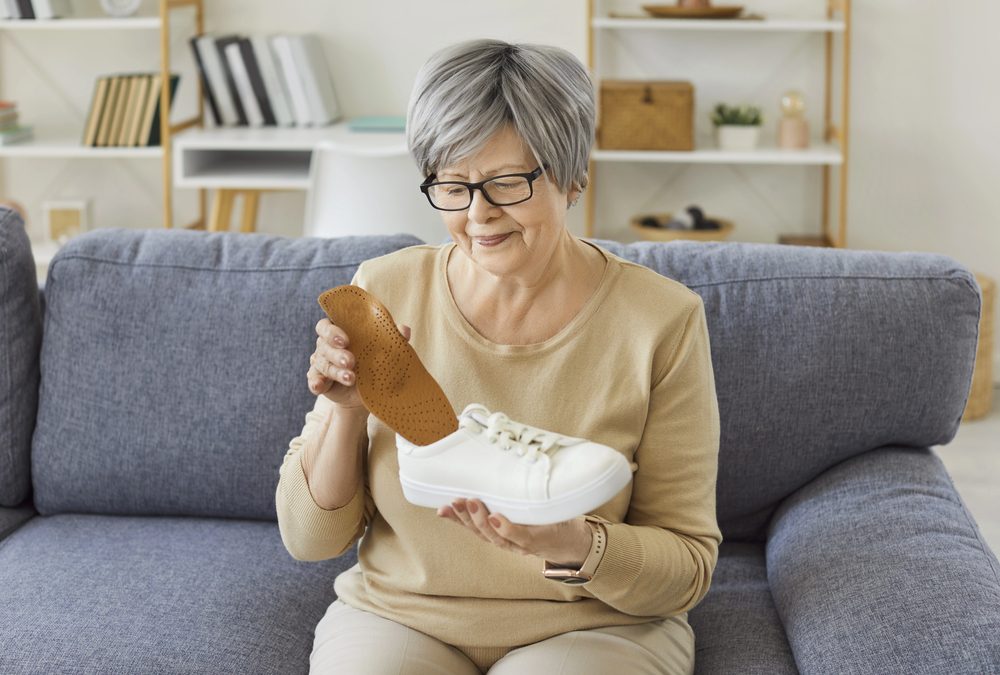
- Add cushioned insoles: Cushioning absorbs impact while walking and may help relieve pressure on joints and the lower back. Arthritis is a common health concern that causes pain and makes walking more challenging for many older adults.
- Invest in slippers: Many seniors prefer slippers indoors, but soft, backless slippers can increase the risk of falls. Slippers without proper grip or heel support may slide off easily or cause shuffling while walking. Instead, seniors should wear supportive indoor shoes or slippers with non-skid soles and closed backs. Walking barefoot or wearing socks alone on smooth floors can also increase slipping hazards and should be avoided.
- Consider athletic footwear: Walking shoes from an athletic brand are often recommended for seniors because they combine comfort, support, cushioning, and traction. Some also offer orthopedic designs specifically made for older adults with arthritis, diabetes, or foot pain.
By choosing supportive, properly fitted shoes with good traction, seniors can reduce fall risks, stay more active, and enjoy greater independence in their daily lives.
Adult Children and Caregivers Can Help
Caregivers and family members can help by regularly checking the condition of a senior’s footwear. Shoes that are excessively worn, stretched out, or unevenly damaged should be replaced promptly. It is also important to monitor for signs of discomfort, blisters, or difficulty walking, as these may indicate the shoes are no longer providing proper support.
If you found this article to be helpful, we invite you to bookmark and follow the Heritage blog. Each week, we publish updates on issues related to healthy aging, caregiving, senior care, and more!